How I Built EasyESells.com
A Technical Breakdown
Role: Lead Full-Stack Developer & Systems Architect
Methodology: Headless Architecture, Asset Automation, & Secure Payment Workflows
The Input
Data Aggregation

The Process
Build Pipeline
The Output
Deployed Store
Stripe Payment
Ecommerce Demo Store
@EasyESells
Explore our full-length product demos and features.
Visit Site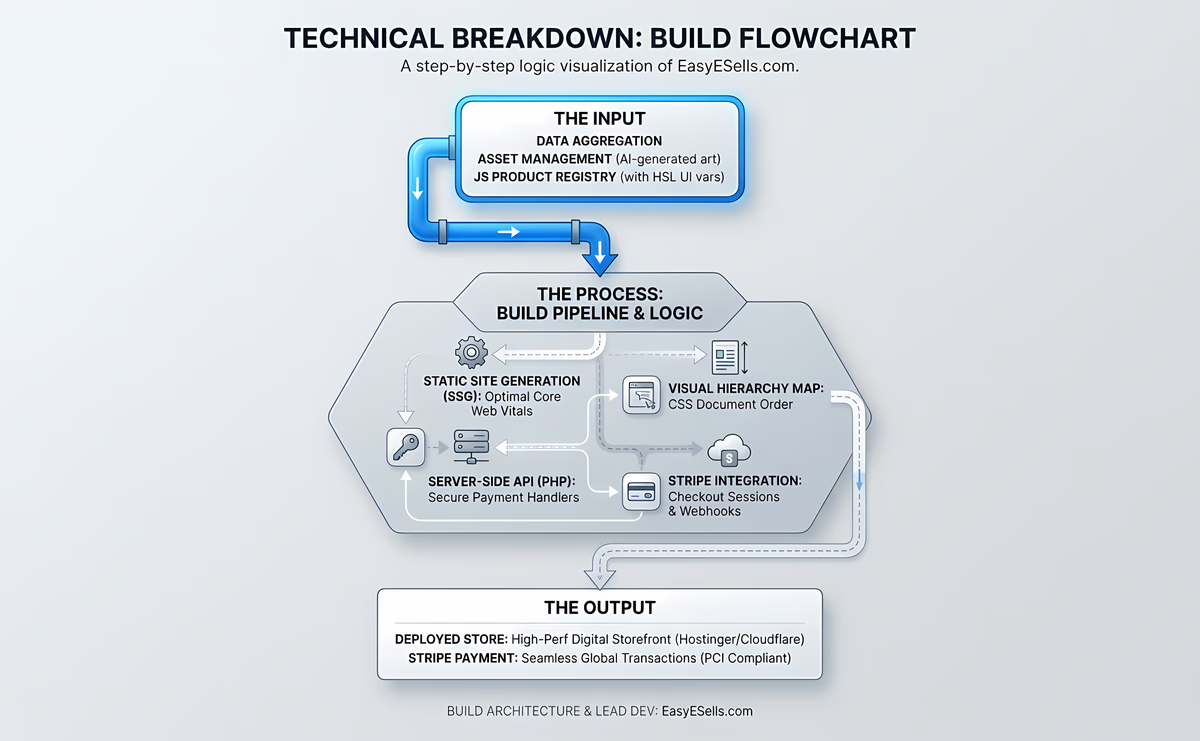
View Technical Specifications & Logic
1. The Input (Data & Assets)
- Data Aggregation: Centralized JSON-based product registry for rapid inventory updates.
- Asset Management: High-resolution AI-generated digital art, optimized for web performance.
- JS Product Registry: A structured data layer handling metadata, pricing, and HSL-themed UI variables.
2. The Process (Build Pipeline)
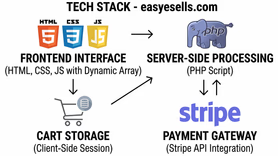
- Static Site Generation (SSG): Built for speed to achieve 90+ Google Lighthouse scores and optimal Core Web Vitals.
- Server-Side API (PHP): Custom backend handlers for secure checkout sessions and digital asset delivery on Hostinger.
- Stripe Integration: Fully automated PCI-compliant payment flow including webhooks for instant order fulfillment.
- CSS Architecture: Mapped strictly to document order to prevent bloat and prioritize critical rendering paths.
3. The Output (Deployment)
- Edge Delivery: Cloudflare integration for global caching and security.
- Scalable Storefront: A conversion-optimized eCommerce experience built from the ground up.
How the Platform Architecture Works
This system is designed to deliver fast, scalable digital storefronts by combining structured data pipelines, static rendering, and secure payment processing.
Structured Data Input
Collect product info, assets, and config files to ensure consistency and enable automation.
Optimized Build Pipeline
Pre-rendered pages boost speed; server-side logic is used only when needed.
Performance & SEO
Clean structure and optimized rendering improve search visibility and UX.
Secure Payments
External services handle global transactions securely and reliably.
Deployment & Delivery
Global delivery ensures fast load times, high uptime, and smooth experience.
Technical Flexibility
Modular architecture allows new features to integrate without major restructuring.